Remembering three
A third birthday keepsake that remembers who they are right now
The favorite animal changes. The funny way they say a word disappears. A third birthday is a lovely excuse to write those details down while they are still part of everyday life, and three is the first age when your child can really help you do it.
Why three is worth saving
Most families are thorough about keepsakes for the first birthday and then stop. Two and three are the birthdays that tend to get lost, which is a shame, since three is the age when a personality shows up with its own opinions. A three-year-old says outrageous things with total confidence, and they will not sound like this at four.
It's also a good age for a keepsake because your child can take part. They can hold still for a handprint and answer questions. They can pick the color of the box, or tell you who should be in the paper. Their answers will make no sense, which is exactly what you want to write down.
Start with the details you would miss
A useful keepsake captures something specific about your child. A picture shows what they looked like; a few well-chosen stories can also preserve what it was like to live with them at three.
You do not need a complete biography. Look through your recent photos or family messages and choose three or four moments. Write down their actual words where you remember them, and label anything you are paraphrasing.
- What phrase do they say so often that the whole family has started saying it?
- Which toy, animal, or vehicle would they notice from across a room?
- What do they insist on doing themselves?
- What small ritual belongs to the two of you?
- What did they learn this year that made them proud?
- What would a grandparent or sibling add to the story?
- Which words do they still say wrong, and how exactly do they say them?
- What rule have they invented that everyone now follows?
Record a short birthday interview to keep
Pick a calm moment, like the bath or a snack, and ask a few of these with your phone recording. Stop when they lose interest, because you will still have plenty. Keep the recording too, because the voice is half of what you'll want later. Ask the same questions every year and you will have something very good by the time they turn ten.
For a longer list written for this age, with tips and a free sheet to print, see our birthday interview questions for a 3-year-old.
- How old are you?
- What is your favorite thing in the whole world?
- What makes you really mad?
- What do I do at work?
- What is your name for me, and what am I good at?
- What do you want to be when you're big?
- Where do babies come from? (You may wish to sit down first.)
- Who is your best friend, and why?
- What is the moon?
- What should we have at your birthday party?
Choose a format your family will enjoy keeping
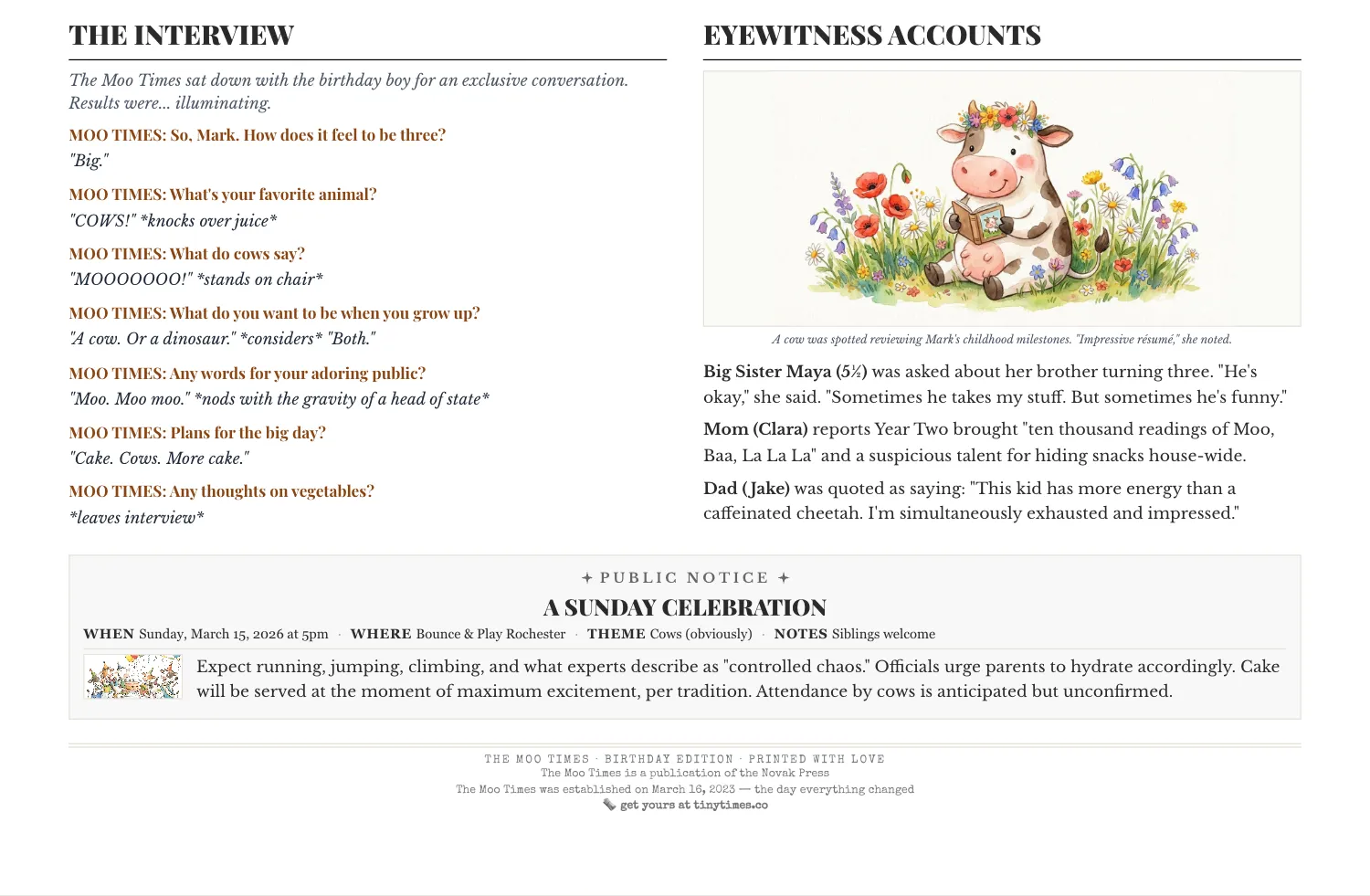
A birthday letter gives you room to tell your child what you love about this age. A memory box can hold a drawing, a photograph, and a short list of favorite things. A birthday newspaper turns the same details into playful headlines, interviews, and family stories. Here is how the common choices compare:
- A letter. Twenty minutes with a pen, and nothing else required. Good for the sincere part.
- The recorded interview above. Free, and likely the thing they will replay most when they are older.
- Their own art, dated and captioned with what they told you it was. At three, it is always something surprising.
- A handprint next to last year's, if you have one. The change between the two is the whole keepsake.
- A memory box holding a favorite outgrown item, a party photo, and the letter.
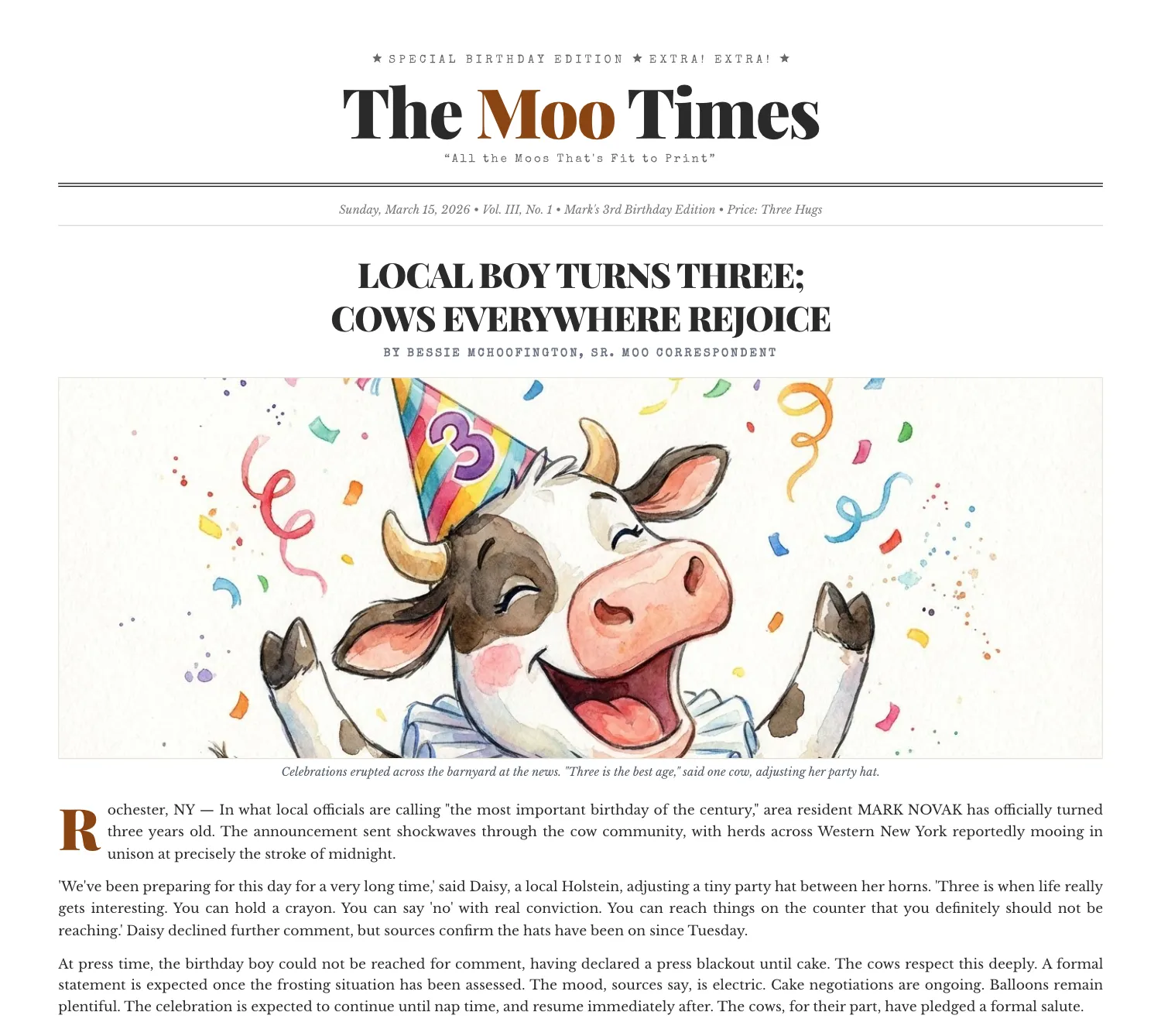
- A newspaper. The funniest of the set, and it can make the whole family laugh at the party before it goes in the box.
How a newspaper handles age three
For example, a made-up headline such as 'LOCAL TODDLER APPOINTED CHIEF PUDDLE INSPECTOR' becomes personal when the story includes a real pair of yellow boots and the park they ask to visit every morning. The family detail is what makes it theirs.
If you choose a newspaper, show a copy at the birthday gathering, then keep it at home. One for your family and perhaps another for grandparents can be plenty. Guests can enjoy reading it without needing a copy to take away.
Make it funny in a way they can grow up with
Celebrate their interests and small triumphs. A determined opinion about breakfast or an impressive knowledge of dinosaurs can be a wonderful story. Read the finished piece with the future reader in mind: will your child feel loved when they find it years later?
Keep private family matters out of the display copy. You can preserve a meaningful detail in a personal letter without making it part of the newspaper on the party table. Stories about potty training are funny at three, and less funny at thirteen when a friend finds them.
Make the newspaper, then make it yours
Tiny Times uses the details you provide to create a personalized birthday newspaper. AI writes the stories and makes the illustrations. Start with the free preview and see whether it captures your child. The paid edition, $19.99, includes text editing, watermark removal, and a printable PDF.
Before printing, check names, quoted phrases, and the little facts that matter to your family, since AI can add something that never happened. Save the PDF with your birthday photos, and see how to print it on 11 × 17-inch paper. If you want a yearly tradition, add a newspaper or letter each birthday; the changes between editions will become part of the story, and our guide to birthday traditions for kids shows how to keep each year side by side. If you have a younger child too, we have ideas for first birthday keepsakes and second birthday keepsakes.
Common questions
What is a good keepsake for a third birthday?
Something that saves their words and opinions, since age three is when those arrive. A recorded interview, a letter, dated artwork, or a birthday newspaper built from things they really say all work well.
How do I save the funny things my three-year-old says?
Write each one down the day you hear it, word for word, with the date. Then record a short interview on their birthday: what their favorite thing is, what makes them mad, what the moon is. Asking the same questions every year turns those notes into a record of how they changed.